
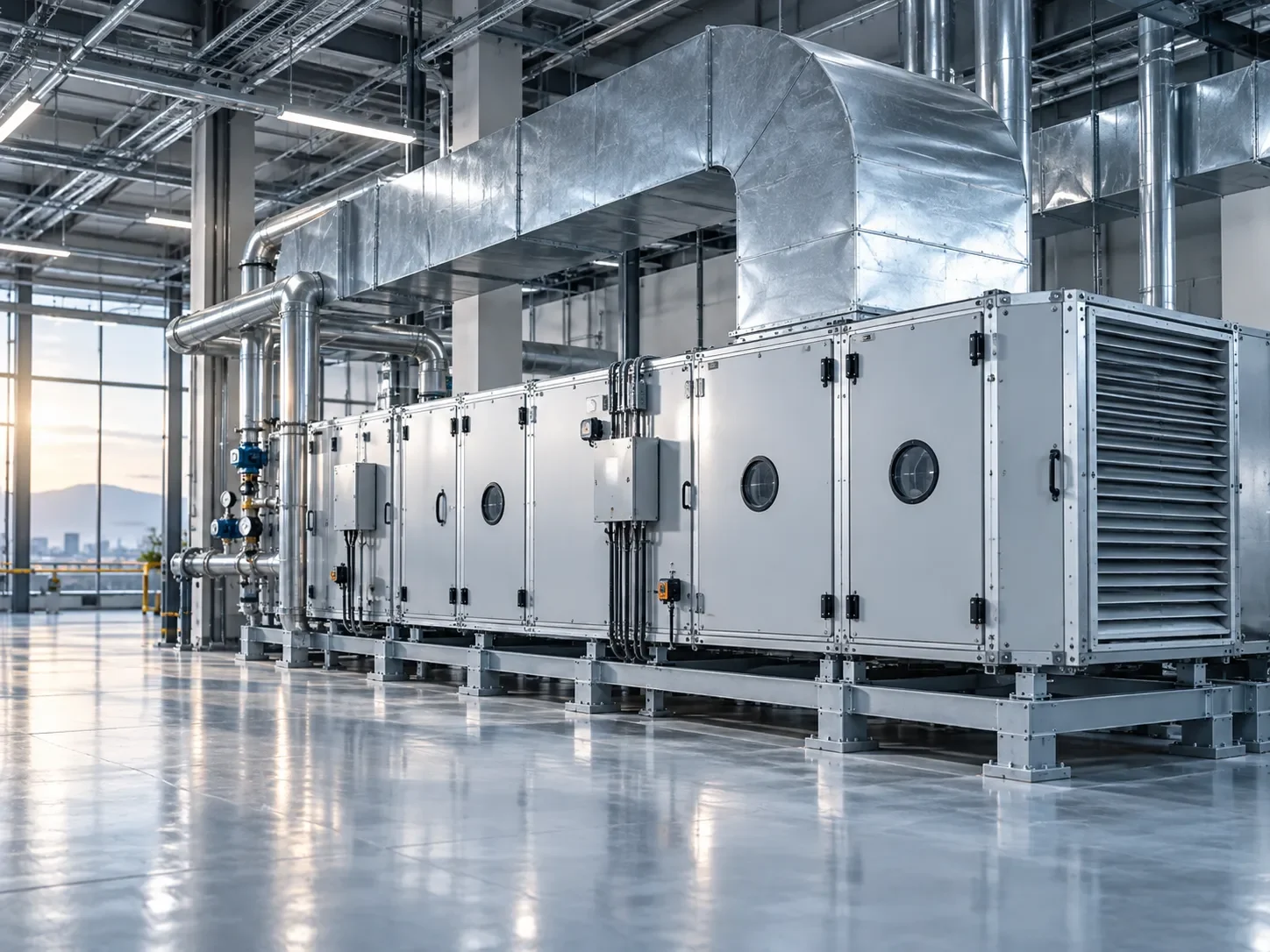
An air handling unit is one of the most important pieces of equipment determining indoor air quality and comfort in large-volume buildings. It combines many functions in a single unit, including fresh air supply, filtration, heating, cooling and humidity control. A poorly selected unit, however, can lead to high energy consumption, noise and inadequate air quality. In this article, we summarise the key points to consider when choosing the right air handling unit.
1. Airflow and Capacity
The first step is to calculate accurately the airflow and the heating and cooling loads that the spaces require. The number of occupants, the purpose of the space, internal heat gains and the amount of fresh air required by regulations must all be taken into account. An undersized unit cannot provide comfort, while an oversized unit needlessly increases both investment and operating costs.
2. Filtration Class
Indoor air quality depends largely on filtration. In general-purpose spaces, F7 bag filters combined with a pre-filter are common, while sensitive applications such as hospitals and clean rooms may require F9 and HEPA filters. It is also important to account for filter pressure drops when selecting fans and to make filter replacement easy.
3. Heat Recovery
Exhaust air removed along with the fresh air supply carries a significant amount of energy. Plate, rotary or run-around heat recovery units transfer most of this energy to the incoming air. This significantly reduces the heating and cooling load, and in most projects the payback period is limited to a few years.
4. Fan Technology and Energy Efficiency
Fans are among the most energy-intensive components of a unit. EC plug fans run more efficiently than conventional belt-driven systems, require less maintenance and adapt easily to speed control. With variable airflow operation, the unit also reduces its energy consumption when demand falls.
5. Casing, Sound and Hygiene
Well-insulated double-skin panels reduce both heat losses and sound transmission. In hospitals and food and pharmaceutical facilities, easy-to-clean interior surfaces, drain pans designed not to hold water and compliance with hygiene certifications are also important. The noise limits of the installation location should be considered during selection as well.
6. Automation and Ease of Service
DDC automation and integration with the building management system allow the unit to be monitored remotely and operated according to demand. Easy access to filters, fans and coils shortens maintenance time and contributes to a long service life.
At DEMO Site, we support you in selecting, installing and maintaining the right air handling unit for your project. Contact us for the most suitable solution for your facility.