
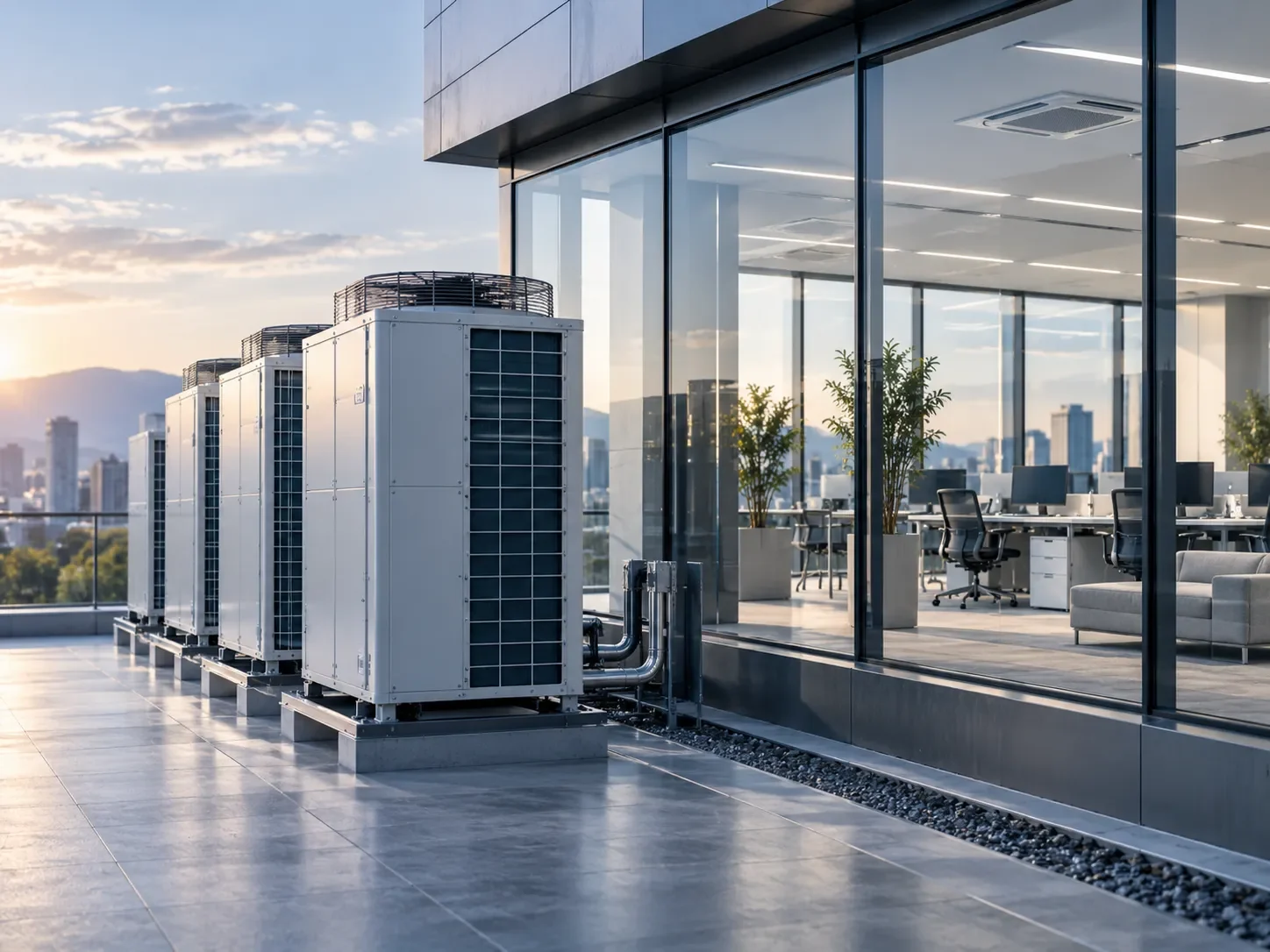
In commercial buildings such as offices, hotels and retail stores, every space has different climate needs. A sunny meeting room may need cooling while an office on the north side needs heating at the same time. VRF (Variable Refrigerant Flow) systems were developed to meet these different needs with a single, highly efficient system.
What Is a VRF System?
In a VRF system, one or more outdoor units are connected to many indoor units by copper piping. The variable-speed compressor in the outdoor unit continuously adjusts the amount of refrigerant according to the demand from the indoor units. As a result, the system produces only the capacity needed at that moment and does not waste energy.
Key Advantages of VRF Systems
- Independent zone control: Each room or zone can be set to its own temperature, schedule and fan speed.
- High energy efficiency: Buildings operate at partial load for most of the year, and this is exactly where VRF systems deliver high efficiency.
- Simultaneous heating and cooling: Heat recovery models transfer heat extracted from one zone to another zone that needs heating, increasing energy savings.
- Flexible design: Cassette, ducted, wall-mounted and console indoor units adapt easily to the architecture.
- Small footprint: No plant room or water piping is required; outdoor units can be placed on the roof or in technical areas.
- Phased investment: The system can be expanded as parts of the building come into use.
Which Buildings Are They Suitable For?
VRF systems are ideal for offices and office towers, hotels, boutique stores, restaurants, clinics, schools and residences. Especially in buildings with many spaces used at different times, allowing each user to condition only their own area increases both comfort and savings. With central control systems, energy costs can also be allocated per tenant.
What to Watch Out For
For a VRF system to deliver the expected efficiency, a separate heat load calculation should be made for each space, indoor unit types should be selected correctly and the piping should be designed within the manufacturer's limits. After installation, pressure testing, evacuation and the correct refrigerant charge must be carried out in full. A mistake at any of these steps directly affects the system's life and efficiency. It should also be remembered that fresh air requirements must be met by a separate ventilation system.
At DEMO Site, we provide design, installation and maintenance for VRF and VRV systems. Explore our VRF products and contact us for the right solution for your building.